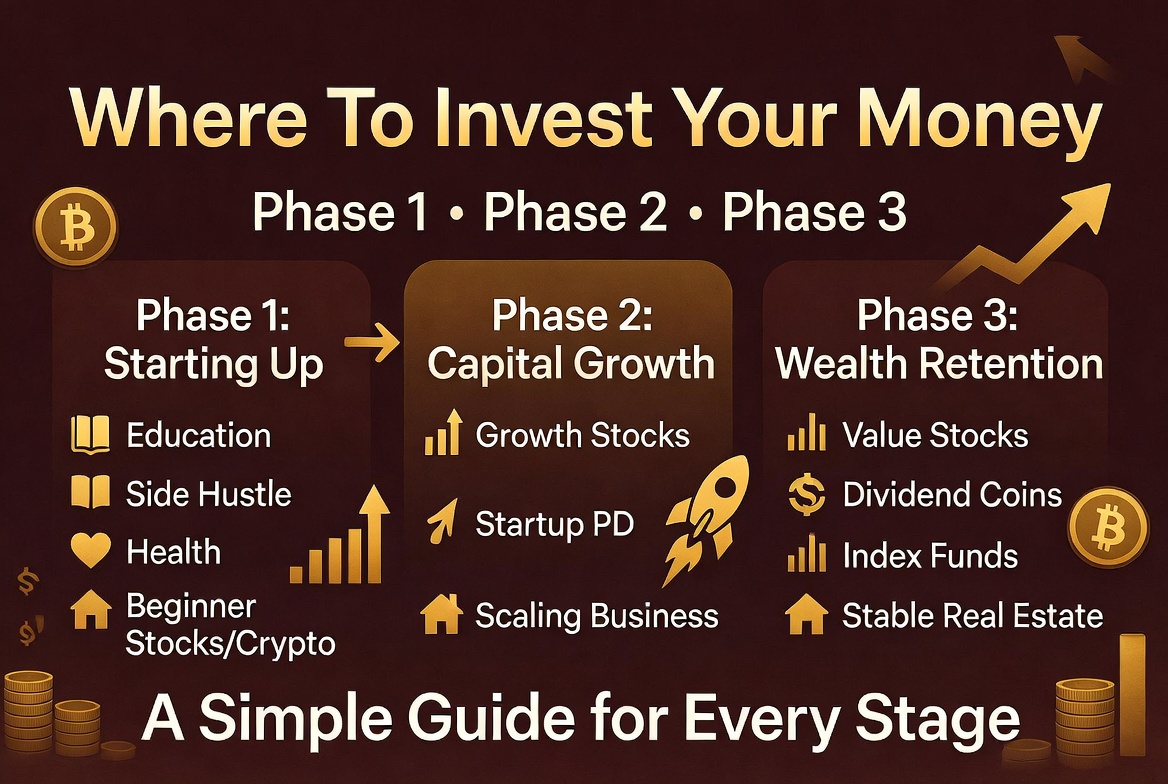
Investing your hard-earned money can feel overwhelming at first—like stepping into a gym for the first time and not knowing which machine to touch. But here’s the good news: smart investing isn’t about getting rich overnight. It’s about building wealth steadily, one smart step at a time. I came across this fantastic visual guide (shoutout to Philip’s Guide!) that breaks down exactly where to invest your money based on three clear life phases. Whether you’re just starting, growing your wealth, or protecting what you’ve built, this roadmap makes it simple and actionable.
Phase 1: Starting Up (The Foundation Stage)
This is where most of us begin. You’re not chasing massive returns yet—you’re building the base that will support everything else later. Here’s what the guide suggests focusing on:
- Your Education: Knowledge is the ultimate investment. Read books, take courses, and learn skills that increase your earning power. An investment in yourself always pays the highest dividends.
- Side Hustles: Don’t put all your eggs in one basket (your 9-to-5 job). Start something small on the side—freelancing, content creation, selling products, or offering services. Many millionaires began with a simple side hustle.
- Your Health: This one hits hard. Eat well, exercise, sleep, and manage stress. A healthy body and mind will help you make better decisions and work longer without burnout. Poor health can wipe out years of financial gains.
- Stocks You Like: Start small. Invest in companies whose products you actually use and understand. It makes investing fun and less scary.
- Crypto You Like: Only if you’re comfortable with higher risk. Treat it as a small portion (not your life savings) and only invest what you can afford to lose.
Pro Tip for Phase 1: Start with whatever you have—even ₹500 or ₹1,000 a month. Consistency beats perfection. Focus on learning and earning more before worrying about fancy strategies.
Phase 2: Capital Growth (The Acceleration Stage)
Once you have some savings and your basics are covered, it’s time to shift gears toward growth. This phase is exciting—you’re actively building momentum. The guide recommends:
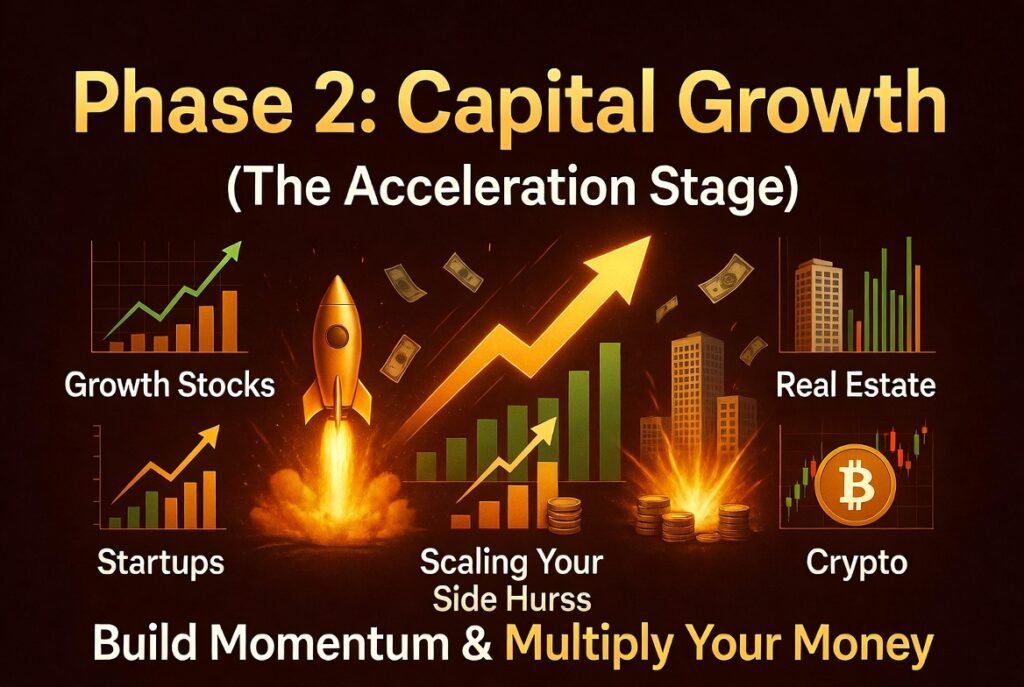
- Growth Stocks: Companies that are expanding fast (think tech, innovation-driven businesses). These can multiply your money over time but come with ups and downs.
- Startups: If you have the risk appetite and some knowledge, backing promising early-stage companies (through platforms or angel investing) can deliver outsized returns.
- Scaling Your Side Hustles: Turn that side income into a real business. Reinvest profits to grow it bigger. Many people eventually quit their jobs because their side hustle took off.
- Real Estate: Buying property (or REITs if direct buying is too expensive) can be a powerful wealth builder through appreciation and rental income.
- Crypto: Still here, but now with potentially larger allocation if you’ve educated yourself. Remember—volatility is real.
Mindset Shift: In this phase, be willing to take calculated risks. But always diversify. Don’t go all-in on one thing, no matter how “sure” it feels.
Phase 3: Wealth Retention (The Protection & Legacy Stage)
Now the goal changes from “making money” to keeping and growing it wisely while enjoying life. Focus areas according to the guide:
- Value Stocks: Stable, well-established companies that are often undervalued but pay steady returns over time.
- Dividend Stocks: These are like having your money work for you. Companies that regularly share profits with shareholders—great for passive income.
- Real Estate: Continue here, but now more for steady cash flow and long-term stability rather than aggressive growth.
- Index Funds: One of the smartest, low-effort ways to invest. These track the overall market (like Nifty 50 or S&P 500) and historically deliver solid returns with lower risk than picking individual stocks.
- Your Health: Yes, it’s back! Because what’s the point of wealth if you can’t enjoy it? Prioritize wellness so you can travel, spend time with family, and live fully.
Golden Rule: In this phase, protect your capital. Use strategies like diversification, rebalancing your portfolio, and perhaps consulting a financial advisor as your wealth grows.
Final Thoughts: Your Money Journey is Unique
This guide isn’t a rigid rulebook—it’s a flexible framework. Your exact path will depend on your age, risk tolerance, income, goals, and where you live (tax rules, market conditions, etc. differ by country). Here are a few universal truths I always share:
- Start early. Time is your biggest ally in compounding.
- Stay consistent. Small monthly investments beat large sporadic ones.
- Keep learning. Markets change, but core principles don’t.
- Never invest money you need in the next 3–5 years in high-risk assets.
- Emergency fund first (6–12 months of expenses) before aggressive investing.
If you’re starting, pick one or two things from Phase 1 and begin this month. In six months, you’ll be amazed at how far you’ve come. What phase are you in right now? Are you focusing more on education and side hustles, or are you already scaling into growth investments? Drop a comment below—I’d love to hear your story and help where I can. Remember: The best time to start investing was yesterday. The second-best time is today. Happy investing!
Disclaimer:
This article is for informational purposes only and does not constitute financial advice. Investing carries risk, and you may lose money. I am not forcing or recommending any specific investment. Always do your own due diligence and consult a qualified financial professional before investing. Only invest what you can afford to lose.